
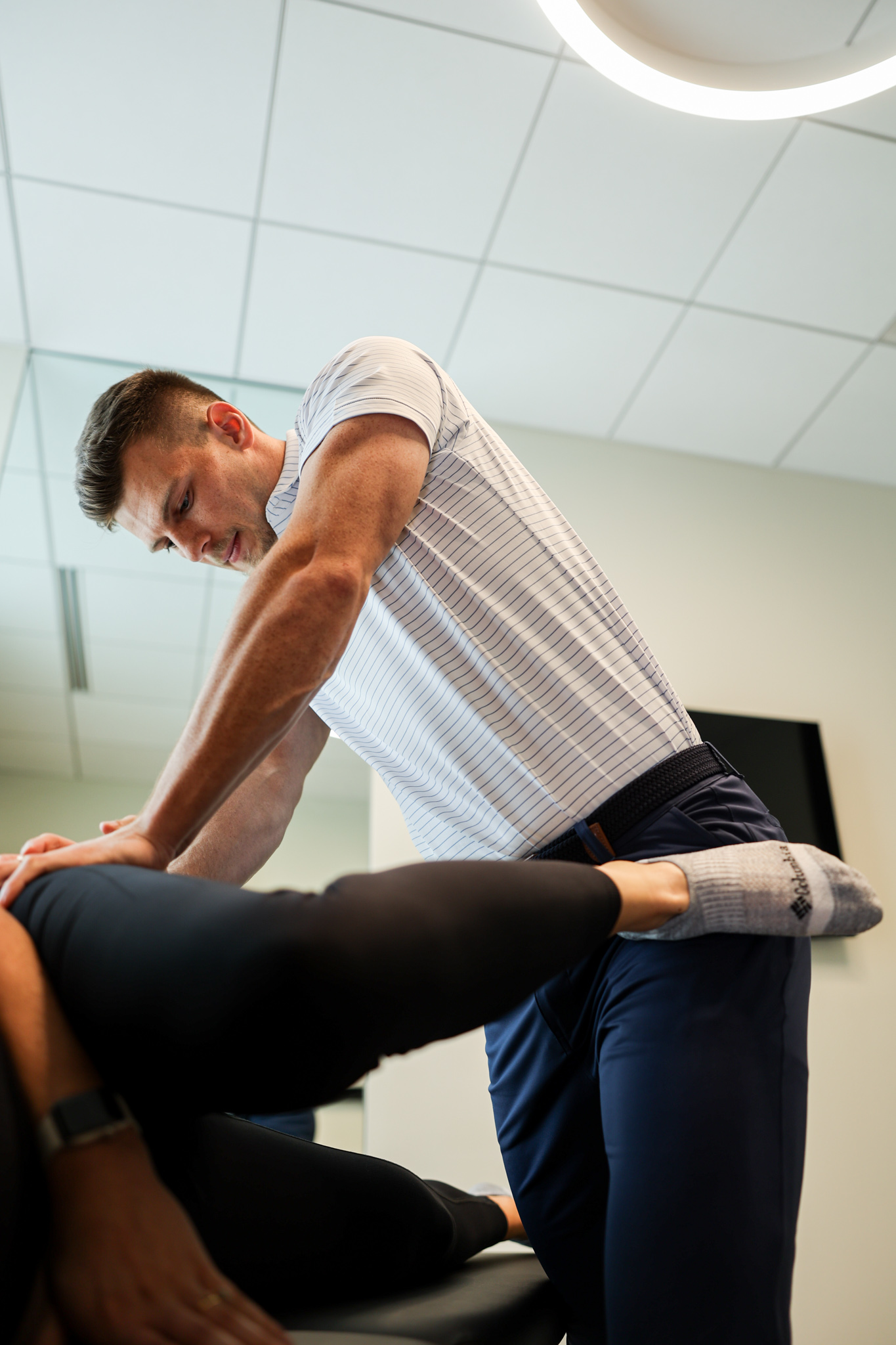
Hip pain is one of the most common complaints among runners—and one of the most misunderstood. Many runners assume hip pain means they need to stretch more, rest longer, or change shoes. While those things can help temporarily, they rarely solve the root issue.
For runners, hip pain is usually a load-management and movement problem, not just a tight muscle.
Your glutes are the primary stabilizers during running. If they aren’t firing efficiently, other tissues—like the hip flexors, TFL, or low back—pick up the slack. Over time, this leads to pain on the side or front of the hip.
Running requires repeated hip extension. If you lack mobility in this range, your body compensates by rotating through the pelvis or lumbar spine, irritating the hip joint and surrounding tissues.
Old ankle sprains, knee injuries, or leg dominance often cause subtle shifts in stride. These asymmetries increase stress on one hip more than the other, especially during longer runs.
During single-leg stance (which is essentially what running is), the pelvis must stay level. Poor lateral hip strength allows the pelvis to drop, compressing the hip joint and irritating tendons and bursae.
Rapid mileage increases, hill work, speed sessions, or trail running can quickly overload hip structures that aren’t prepared to handle the demand.
Stretching and foam rolling feel good, but they don’t fix:
Without addressing these factors, hip pain often becomes a recurring issue.
At Highland Spine and Sport, we take a runner-specific approach by:
Our goal is not just pain relief—but helping you run stronger and more efficiently.
If your hip pain:
It’s time to address the root cause.