
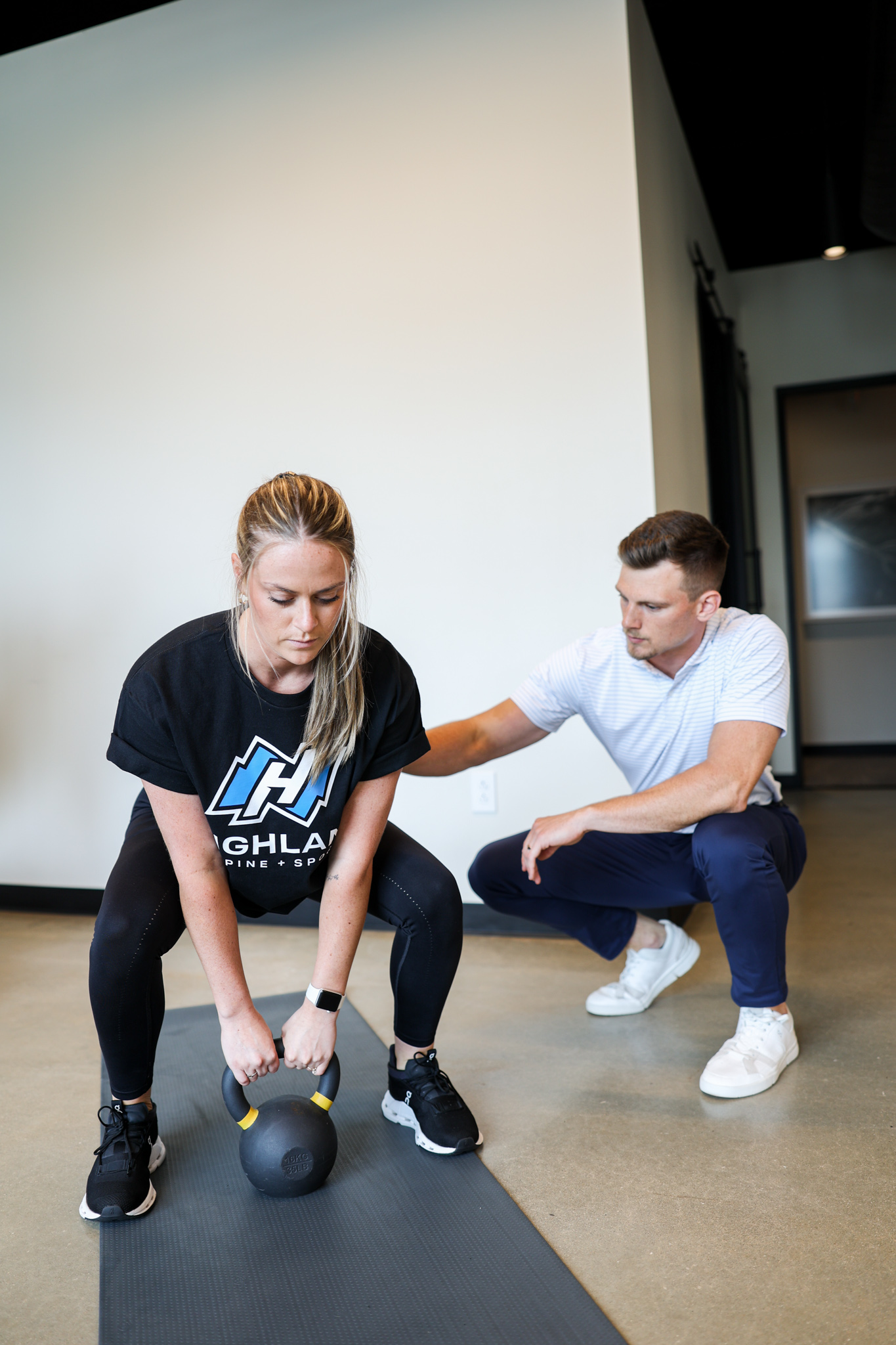
When people think of a sports chiropractor, they often picture an adjustment table, soft tissue tools, or maybe dry needling. While all of those can be valuable, the single most important piece of equipment in a sports chiropractor's office isn't a table—it's a way to safely load patients.
Why?
Because moving better doesn't automatically mean you're strong enough to return to the activities that caused your pain in the first place.
One of the biggest misconceptions in rehabilitation is that pain disappearing means the injury is gone. In reality, pain is only one piece of the puzzle.
A patient may regain full range of motion after a few treatments, but if the muscles, tendons, and connective tissues haven't regained their ability to tolerate force, the risk of reinjury remains high.
That's why our goal isn't simply to help you feel better.
Our goal is to help you become resilient enough to stay better.
Whether you're a runner, CrossFit athlete, golfer, pickleball player, or simply someone who wants to lift their grandchildren without pain, your tissues must be exposed to gradually increasing loads.
This process, called progressive loading, helps your body adapt by improving:
Without this progression, many patients return to activity too soon and find themselves right back where they started.
At Highland Spine + Sport, we don't believe rehabilitation should stop once your pain decreases.
Instead, we want to see how your body performs under load before you return to full activity.
That might include:
These exercises aren't chosen to make you tired. They're selected to gradually expose your body to the demands of your sport or daily life while allowing us to monitor technique, symptoms, and confidence.
Spinal adjustments can improve mobility, reduce pain, and help restore movement. Manual therapy, dry needling, and soft tissue work all have an important role in rehabilitation.
But none of these treatments make a tendon stronger.
None of them build muscle capacity.
None of them prepare you to sprint, squat, jump, throw, or lift heavy objects.
Strength is earned through progressive loading.
One of the biggest reasons injuries return is because patients judge recovery based on how they feel instead of what their body can tolerate.
Pain is subjective.
Capacity is measurable.
Before returning to full activity, we want to know:
If the answer is no, there's still work to do—even if you're feeling much better.
Perhaps the greatest benefit of loading patients isn't just physical.
It's psychological.
Many people are afraid to move after an injury because they're worried they'll "throw it out again."
By gradually increasing resistance in a controlled environment, patients learn that their body is capable again. That confidence often becomes the bridge between rehabilitation and returning to the activities they love.
Our goal isn't simply to get you out of pain.
Our goal is to restore your ability to move, build your capacity to handle life's demands, and reduce the likelihood of future injuries.
Because moving well is important.
Being strong enough to keep moving is what truly keeps you healthy.