
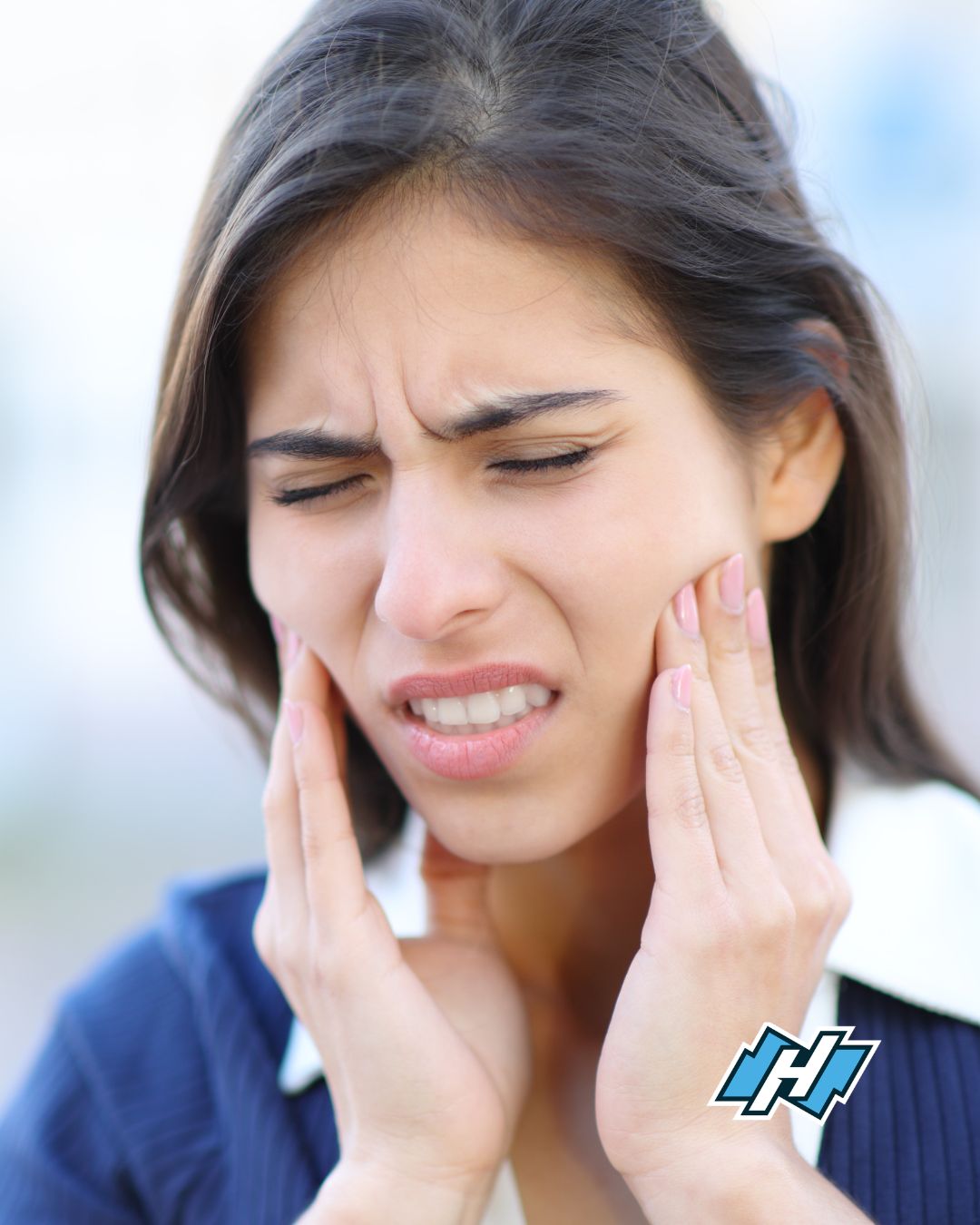
Do you experience jaw pain when you chew, tension around your face, or a clicking sound when you open your mouth? You might be dealing with a temporomandibular disorder, often called TMD.
At Highland Spine + Sport in Roanoke, we help people understand what may be contributing to their jaw discomfort and develop a plan to help them feel and move better.
Your temporomandibular joints, or TMJs, are located just in front of your ears. They connect your lower jaw to your skull and allow you to talk, chew, yawn, and move your mouth.
Everyone has TMJs, but when the joints or surrounding muscles become painful or don’t move comfortably, the condition is called a temporomandibular disorder, or TMD. You may also hear people refer to it simply as “TMJ.” NIDCR
Symptoms can vary from person to person, but may include:
Clicking by itself is common and doesn’t necessarily mean something is wrong. But if it comes with pain, locking, or limited movement, it’s worth getting checked out. NIDCR
There isn’t always one clear cause. Jaw discomfort can involve the joint, the muscles that move it, or a combination of factors. Clenching your teeth, grinding, chewing gum frequently, and stress-related muscle tension may contribute to symptoms for some people.
Your neck and jaw also work closely together, so we consider the areas around your jaw when looking at how you move and what might be contributing to your discomfort.
At Highland, we take a one-on-one, movement-focused approach to care. We start by listening to your concerns and learning how your symptoms affect your daily life—whether that’s eating, working, exercising, or sleeping.
Depending on your needs, your care may include:
Your treatment plan is tailored to you and your goals. Our aim is to help you understand your symptoms and feel confident managing them.
One helpful place to start is noticing what your jaw is doing when you’re not eating or talking. Many people unknowingly hold their teeth together or clench throughout the day.
Try this comfortable resting position:
You don’t need to force the position. Think of it as a gentle reminder to let go of tension, especially when you’re working at a computer, driving, or concentrating. uclh.nhs.uk
Watch the video below for a demonstration of this resting mouth position.
[Insert your resting mouth position video here.]
If your jaw pain keeps coming back, makes it difficult to eat, or interferes with your day, an evaluation can help you understand what’s going on. If your jaw locks, you have significant trouble opening your mouth, or you have persistent or worsening pain, contact a healthcare professional or dentist for an assessment. NHS
Jaw pain doesn’t have to be something you simply put up with. At Highland Spine + Sport in Roanoke, Virginia, we’ll take the time to listen, assess how you move, and help you find a path toward feeling better.
Contact Highland Spine + Sport to schedule an appointment or a free 15-minute discovery call.
Feel better. Move better. Live better.