
Knee pain treatment in Roanoke, VA, starts with finding the true cause of your pain, then easing it through conservative care like chiropractic adjustments, soft tissue therapy, and dry needling. At Highland Spine + Sport, we help active adults move comfortably again without rushing toward surgery.

Knee pain shouldn't decide whether you run the Roanoke River Greenway, hike the Blue Ridge, or finish a full round of golf. Too many active adults in their 40s and 50s accept aching knees as the price of staying busy. You have better options, and most of them don't involve an operating room.
Here's what you'll find on this page:
At Highland Spine + Sport on Brambleton Avenue, Dr. Matt Amos takes time to understand why your knee hurts before building a plan to fix it. Let's walk through it together.

Your knee joint works harder than almost any other part of your body. It carries your weight, absorbs impact, and bends thousands of times a day. Inside, your meniscus cushions the bones, your ligaments hold everything stable, and smooth cartilage keeps movement fluid.
When any of these structures get irritated, overloaded, or worn, pain follows. The encouraging part? Most knee pain responds well to targeted, conservative care once you address the real source instead of chasing the symptom.
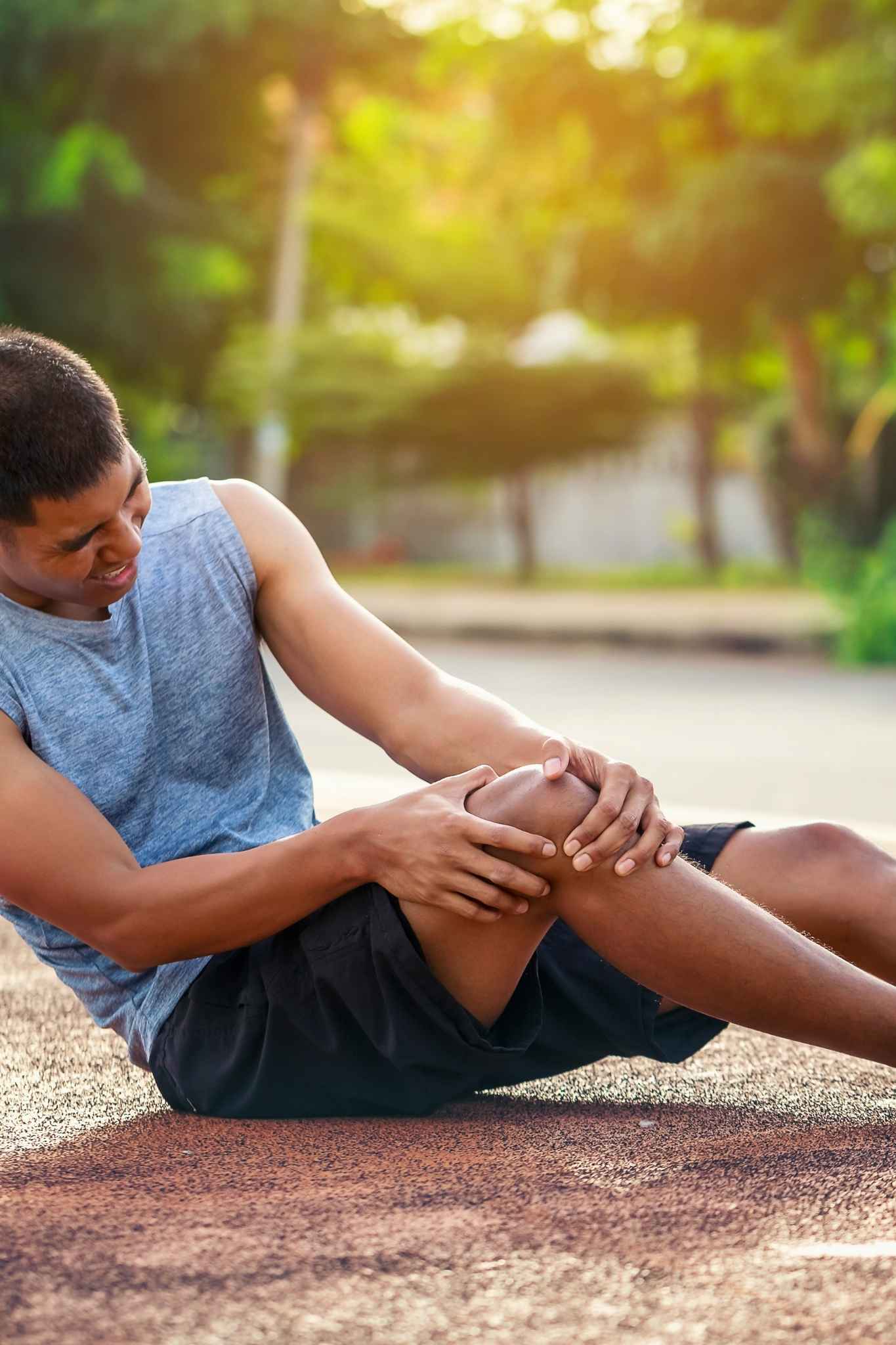
The way your knee hurts offers real clues. Many generic pages stay vague here, but matching your pattern helps you take the right next step.
Front of knee pain often points to patellofemoral pain syndrome, also called runner's knee. You'll usually feel it around or behind the kneecap.
Inner knee pain can signal meniscus irritation or early osteoarthritis. People often describe a deep ache inside the joint.
Outer knee pain frequently traces back to IT band irritation, common in distance runners and cyclists who log steady miles.
Your specific aggravators tell a story too:
A handful of issues show up again and again in runners, cyclists, hikers, golfers, and weekend warriors:
Knee pain after running deserves special attention. Sudden mileage jumps, worn shoes, and tight hips can all push your knee past its limits. Effective runner's knee treatment works best when we look at your whole stride, not just the sore spot.
Your knee rarely struggles alone. It sits between your hip and your ankle, so trouble above or below often shows up right in the middle.
Weak hip muscles can let your knee collapse inward during a run or squat. Stiff ankles or flat feet change how force travels up your leg. Limited mobility in your foot mechanics can quietly overload your knee for months before you notice it.
This is why we assess your whole movement pattern, not just the joint that hurts. Treating the knee in isolation often means the pain comes back. Treating the cause helps it stay gone. You're welcome to explore the full range of conditions we treat at Highland Spine + Sport to see how connected the body really is.
Use this guide to understand what your symptoms might mean and when to act. It's educational, not a diagnosis, so when in doubt, book an appointment.

Most active adults benefit from a real trial of conservative care first. That's especially true when your pain is activity-related, your knee still bears weight, and you have no major trauma history.
Imaging like an X-ray or MRI may be appropriate when pain doesn't improve with care, when we suspect a significant meniscus or ligament tear, or when your symptoms don't match the exam. We'll guide you toward the right next step rather than ordering scans by default.
Some situations call for prompt referral or urgent evaluation. Seek immediate care if you can't bear weight, your knee looks deformed, you have major swelling after an injury, or you notice signs of infection like fever and redness. The American Academy of Orthopaedic Surgeons and MedlinePlus both note that early, conservative care helps many people avoid more invasive options.
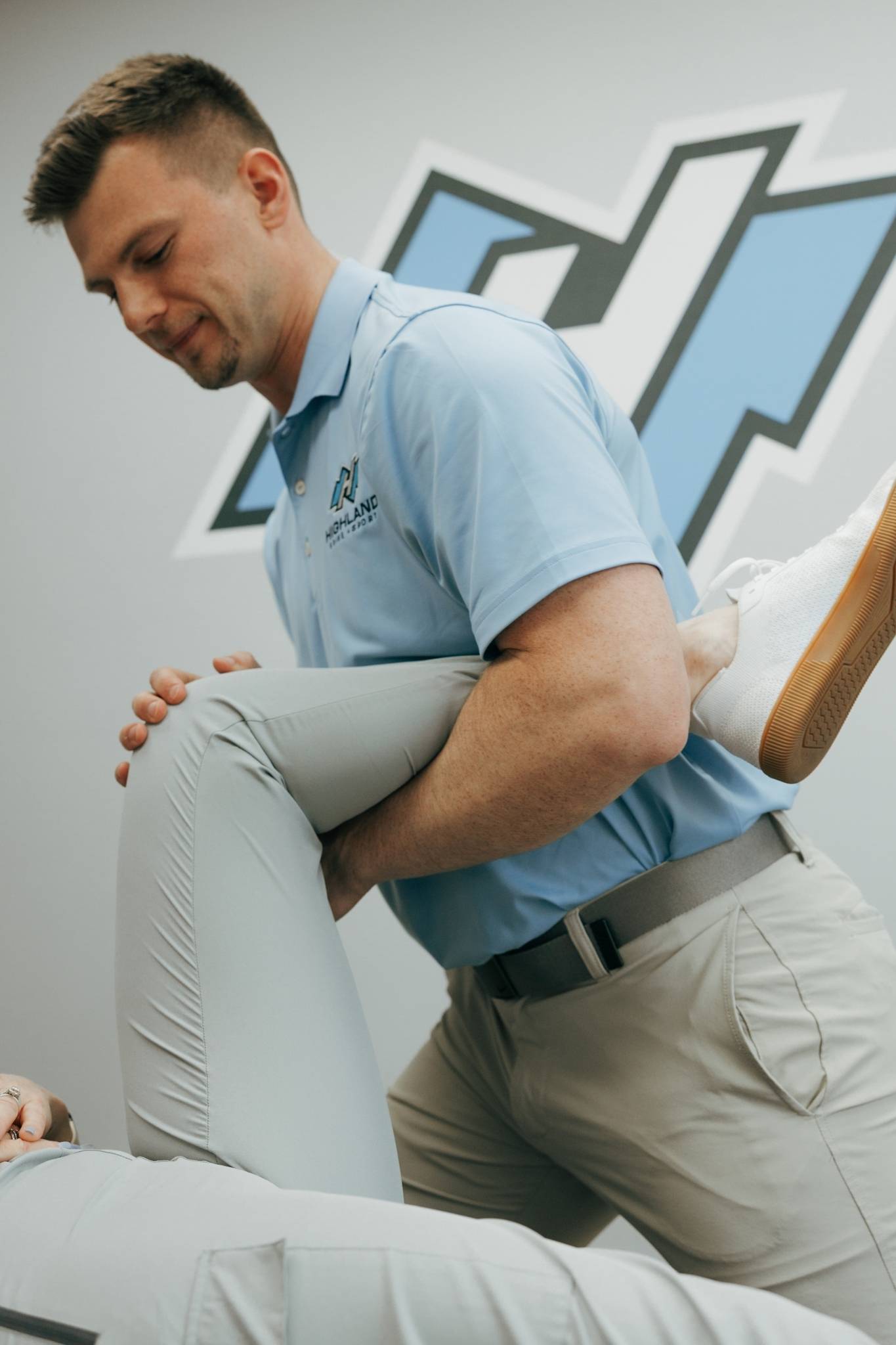
We believe active adults deserve a genuine shot at conservative care before any surgery conversation. Dr. Matt Amos, a chiropractor and the founder of Highland Spine + Sport, builds every plan around your body, your goals, and the activities you want to return to. No cookie-cutter routines, and no rushing you toward the operating room.
Our care blends several services to support lasting knee pain relief.
Targeted adjustments help restore joint function and improve how your knee, hip, and ankle move together. Better alignment means better load distribution, which takes stress off an irritated knee joint. Learn more about our chiropractic care in Roanoke.
Tight muscles and restricted tissue change how your knee tracks with every step. Our soft tissue therapy releases tension, improves mobility, and supports healing in the muscles surrounding your knee, hip, and lower leg.
Dry needling targets tight, overactive muscle bands to ease pain and improve blood flow. Many active adults find it helpful for stubborn runner's knee and IT band tension.
Hands-on care helps you feel better. Smart movement keeps you that way. We start with a full movement assessment, then build a sports rehabilitation plan that strengthens weak links and corrects imbalances. You'll also get simple home exercise guidance, so progress continues between visits.
Walking into a new clinic can feel uncertain, so here's exactly how we'll spend your first visit together:
Many generic local pages stop at listing symptoms, pushing injections, or jumping to surgery talk. We'd rather understand your biomechanics and your activity demands, then treat the root cause so relief lasts.
Knee pain doesn't have to mean giving up your favorite trail or your weekend tee time. With the right plan, many active adults across the Roanoke Valley find real, lasting relief through conservative, personalized care.
Your first visit helps you understand what's driving your pain, what to do about it, and what realistic relief looks like. From there, we'll build a plan that fits your life and keeps you moving.
Ready to feel better? Call us at (540) 339-7911 or schedule your appointment online today. Our office sits at 2705 Brambleton Ave. SW, Roanoke, VA, and we'd love to help you get back to doing what you love.
The best non-surgical knee pain treatment depends on your specific cause. At Highland Spine + Sport, we combine chiropractic care, soft tissue therapy, dry needling, and tailored rehab to address the root of your pain and help you avoid surgery when possible.
Yes. Knee pain after running often connects to hip, ankle, or foot mechanics. We assess your whole movement chain, then use hands-on care and rehab to correct imbalances, relieve runner's knee, and help you return to the trails comfortably.
Get prompt evaluation if your knee locks, buckles, swells significantly, or won't bear weight. Pain lasting more than two weeks, or pain that limits daily activity, is also worth a professional assessment so you can start the right care early.
Many active adults find dry needling helpful for stubborn knee pain. It targets tight muscle bands around the knee, hip, and lower leg to ease tension and improve blood flow, often as part of a broader, personalized treatment plan.
Usually not entirely. We aim to keep you active with modified movement and a plan that protects your knee while it heals. Staying mobile in the right way often supports recovery better than complete rest.
We help with patellofemoral pain syndrome, osteoarthritis-related discomfort, meniscus irritation, ligament strains, IT band syndrome, and overuse injuries common in runners, cyclists, hikers, golfers, and gym-goers across Roanoke, Cave Spring, and Salem.
Join our email list to stay up to date with the the clinic!