
A herniated disc happens when the soft center of an intervertebral disc pushes through its outer wall and presses on a nearby nerve. At Highland Spine + Sport in Roanoke, VA, we treat it with a personalized, non-surgical plan built around chiropractic care and rehabilitation, not medication or surgery first.
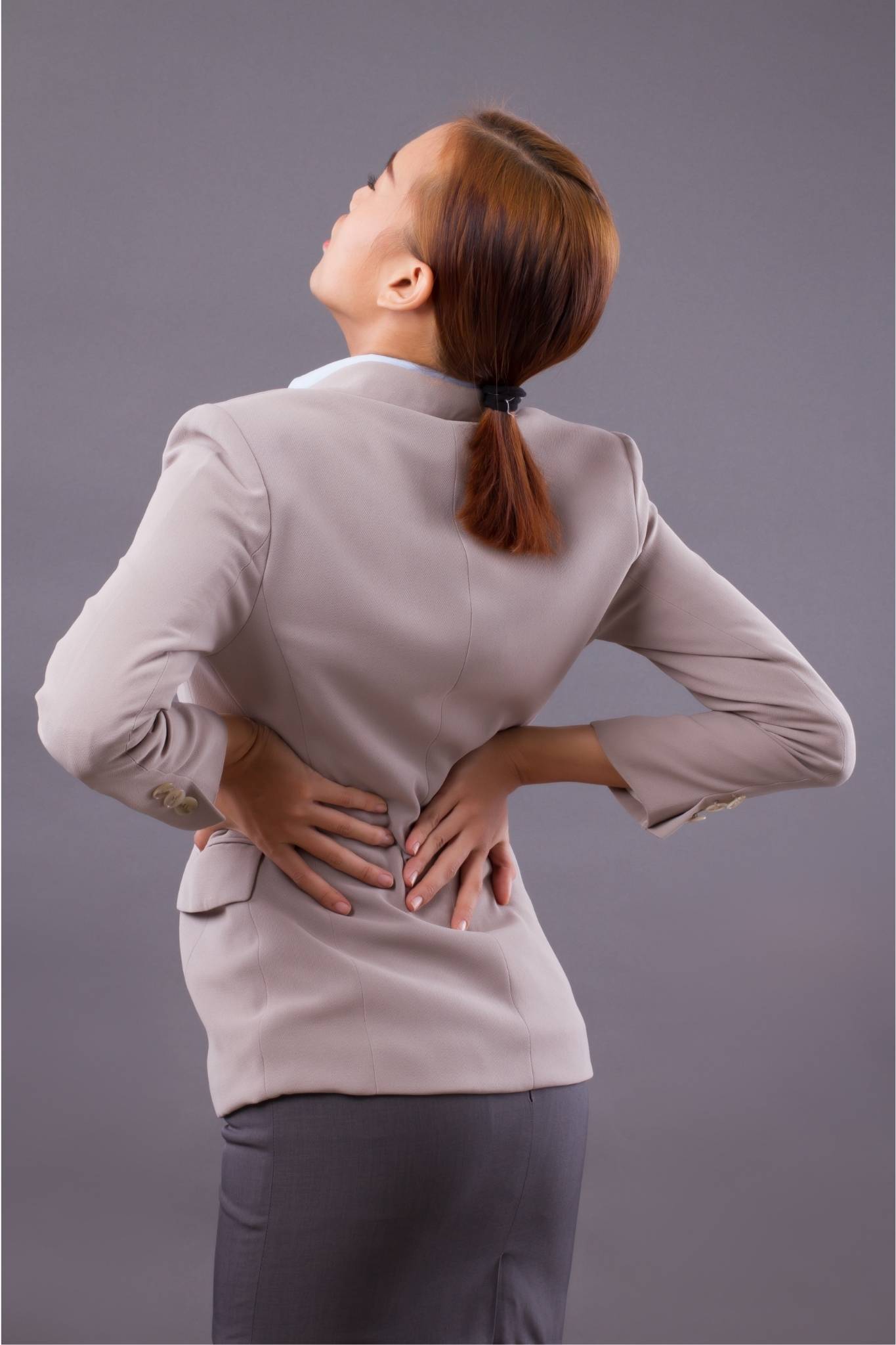
That burning pain shooting down your leg? The tingling creeping into your fingers? Many active adults brush it off as a pulled muscle or "just sciatica." More often than you'd think, a disc problem in the lower back or neck sits quietly at the root of it.
Here's the reassuring part. Most people recover well with conservative care once someone pinpoints the true source of the trouble. You don't have to rush toward an operating room.
Let's walk through what a herniated disc really is, how symptoms differ between your low back and neck, when to seek help, and how our team builds a plan to get you back to what you love.

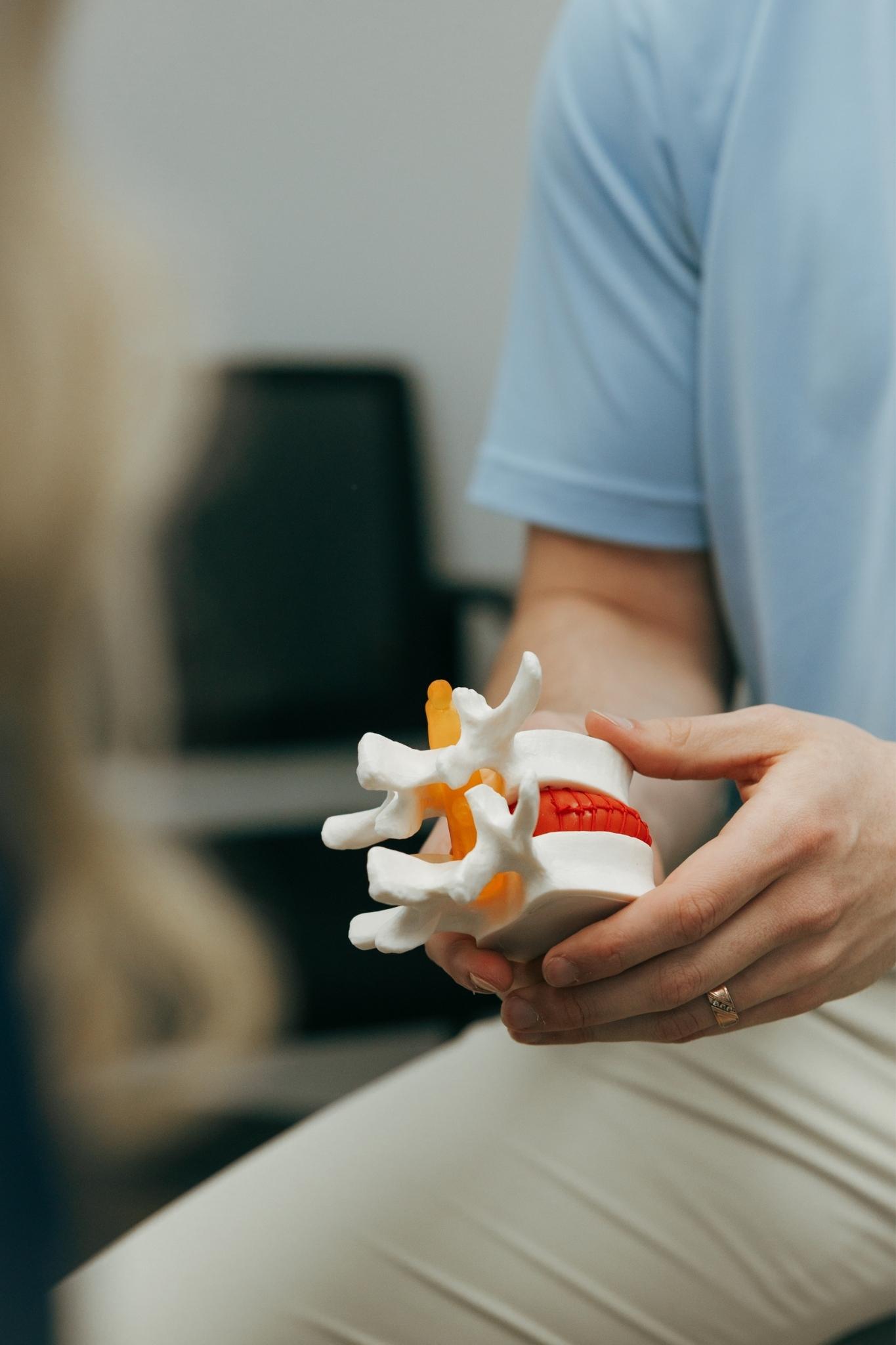
Your spine stacks bones called vertebrae, with a cushion between each one known as an intervertebral disc. Picture each disc like a jelly-filled pad that absorbs shock and lets you bend, twist, and lift.
When the tough outer layer weakens or tears, the soft inner core can bulge or leak out. That's a herniated disc, sometimes called a bulging disc or a slipped disc. These terms describe similar problems along the same spectrum.
Trouble starts when displaced disc material presses on a nearby nerve. This nerve root compression triggers pain, numbness, tingling, or weakness that can travel far from the actual disc. Doctors call this radiating nerve pain radiculopathy.
According to MedlinePlus, herniated discs rank among the most common causes of back and leg pain in adults. The encouraging news is that they respond well to the kind of targeted, conservative care we specialize in.
Discs herniate for plenty of everyday reasons. You don't need a dramatic accident to end up in pain.
Certain movements tend to flare symptoms once a disc is irritated. Sitting for long stretches, bending forward, coughing, or lifting can turn up the volume on low back pain. For neck issues, looking up, turning your head, or reaching overhead often does the same. Knowing your personal aggravators helps us build a plan that fits your daily life.
Where the disc herniates changes how you feel it.
A problem in your lower back, the lumbar spine, sends symptoms toward your hips, legs, and feet.
A problem in your neck, the cervical spine, sends them into your shoulders, arms, and hands.
Match your symptoms to the patterns below.
Whether your issue calls for lumbar herniated disc treatment or cervical herniated disc treatment, the goal stays the same: ease pressure on the nerve and rebuild the strength that protects your spine.

Sciatica isn't a condition on its own. It's a pattern of nerve pain, and a lumbar disc is one of its most common triggers. If your symptoms travel down one leg, a disc may be pressing on the sciatic nerve root.
Watch for these clues:
If those sound familiar, our non-surgical sciatica treatment in Roanoke often starts by addressing the disc behind the pain. Treat the source, and the leg symptoms frequently settle.
Most active adults benefit from a genuine trial of conservative care first. Research summarized by the National Institute of Neurological Disorders and Stroke supports non-surgical care as the first-line approach for most disc-related pain.
You may be a strong candidate for herniated disc treatment without surgery if:
Chiropractic care for a herniated disc works especially well when it's paired with rehabilitation and guided by a thorough assessment. Surgery isn't the default. It's usually the last resort after conservative options have had a fair chance.
Plenty of pages on this topic leave readers stuck. Some pile on education but never offer a next step. Others push hard on booking without earning your trust. Many stay too generic to feel relevant, jump straight to surgery or injections, or imply that a single spinal adjustment solves everything.
Real recovery rarely works that neatly. A herniated disc is a mechanical problem with a nerve consequence. Calming the pain matters, and so does correcting the movement patterns that irritated the disc in the first place. Skip that second part, and symptoms tend to return.
That's the gap we set out to close for the Roanoke community.
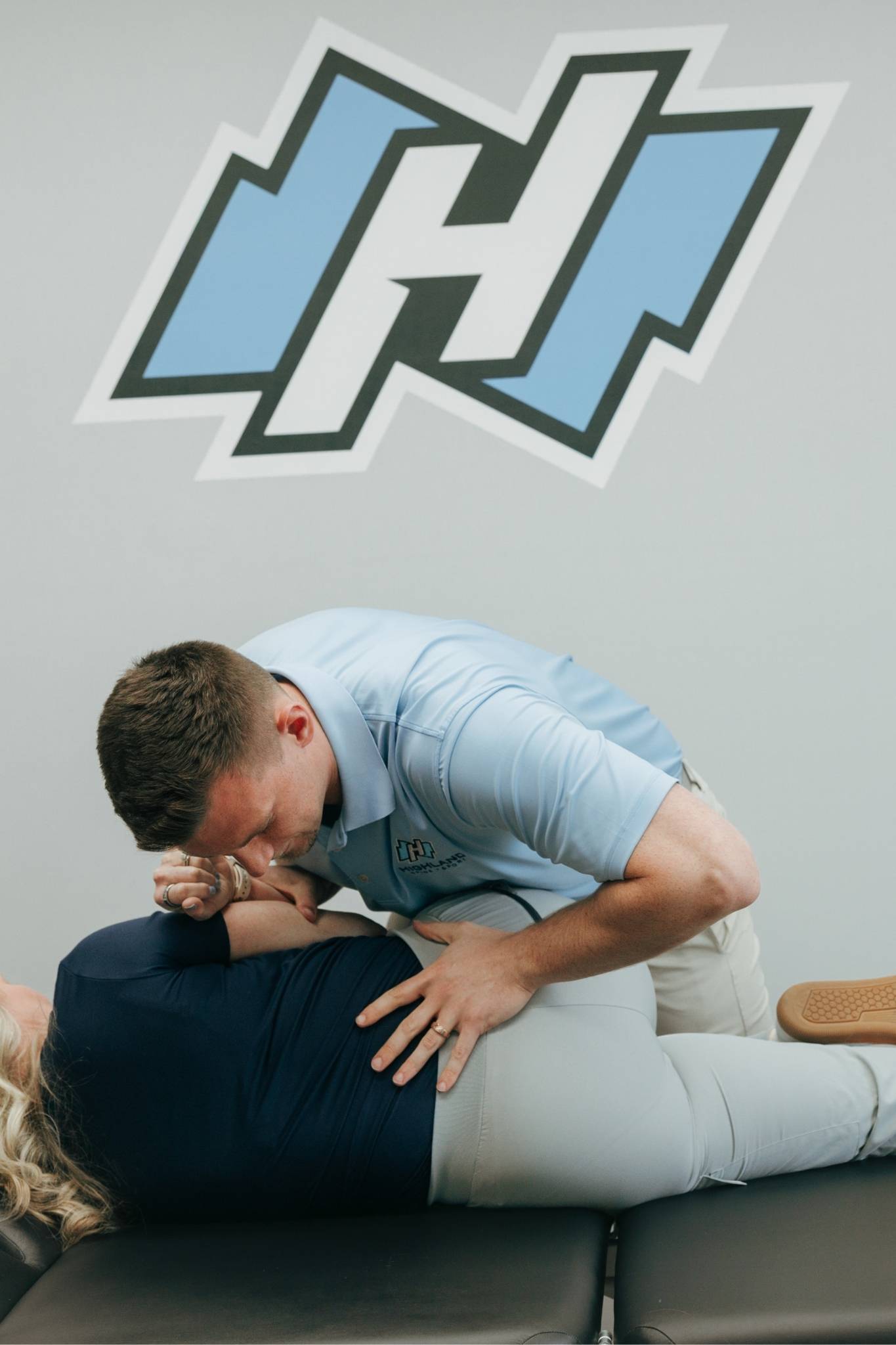
We're on Brambleton Avenue in the heart of Roanoke, and we're proud to be more than a traditional chiropractic office. Dr. Matthew Amos and our team focus on active adults who want to return to lifting, running, cycling, or simply living without pain.
Every plan blends several services into one personalized, evidence-based strategy. One passive treatment rarely fixes a herniated disc on its own.
Precise chiropractic care restores joint function and reduces mechanical stress on an irritated nerve root. Better spinal motion creates better conditions for healing, whether the issue sits in your lumbar spine or cervical spine.
Tight, guarded muscles often amplify disc pain. Our soft tissue therapy releases that tension and improves circulation.
For stubborn trigger points, dry needling calms overactive muscle bands and restores function.
Hands-on care helps you feel better. Smart movement keeps you that way. Our sports rehabilitation program strengthens weak links, corrects imbalances, and gives you home exercises so progress continues between visits. This is where lasting, return-to-activity results come from.
Walking into a new clinic can feel uncertain, so here's exactly how we'll spend your first visit together.
We'll also talk about when imaging makes sense. An MRI isn't always necessary, and we won't order scans by default. When symptoms don't improve or red flags appear, we'll guide you toward the right next step, including referral when appropriate.
Recovery timelines vary with the severity of the herniation and your overall health. Many people notice meaningful relief within a few weeks of consistent conservative care, while full recovery can take a couple of months.
We move in stages. First, we calm the pain and protect the irritated nerve. Then we rebuild strength, control, and confidence so you can return to lifting, running the Greenway, or cycling the Blue Ridge Parkway without fear of a flare-up. Our patients across South Roanoke, Cave Spring, and Salem often tell us they value the full picture: clear explanations, relief without surgery, and exercises that keep helping long after their visits.
Most herniated discs improve without emergencies. A few warning signs, though, call for immediate attention. Don't wait on these.
If you notice any of these signs, seek medical care right away rather than booking a routine visit.
Guessing rarely ends well with nerve pain. The longer an irritated nerve stays compressed, the longer recovery can take, and a personalized plan almost always beats trial and error at home.
You don't have to accept back pain, neck pain, or sciatica as your new normal. With the right plan, many active adults across the Roanoke Valley find real, lasting relief through conservative, personalized care.
Call us at (540) 339-7911 or book your appointment online with Highland Spine + Sport in Roanoke. Let's find the source of your pain together and get you back to doing what you love.
Yes. Chiropractic care is a safe, non-invasive option for many herniated discs. We use precise adjustments to restore joint motion and ease nerve pressure, then pair that with rehabilitation so your relief lasts. Surgery is rarely the first step for disc-related pain.
Absolutely. A lumbar herniated disc is one of the most common causes of sciatica. When displaced disc material presses on the sciatic nerve root, you feel pain, numbness, or tingling traveling through the buttock, thigh, and leg. Treating the disc often resolves the sciatica.
It varies by location. A lumbar disc often causes deep low back pain plus sharp, radiating pain, numbness, or weakness down one leg. A cervical disc tends to cause neck pain that travels into the shoulder, arm, or hand, sometimes with tingling or grip weakness.
Not quite, though the terms overlap. A bulging disc means the outer wall stretches outward while staying intact. A herniated disc means the inner material breaks through that wall. Both can press on a nerve, and both respond well to conservative care.
The best approach is a personalized, multimodal plan rather than one single technique. At Highland Spine + Sport, we build our plans around chiropractic care and sports rehabilitation, supported by soft tissue therapy and dry needling when helpful, all tailored to your symptoms and goals.
Often, yes. Many herniated discs improve as the body reabsorbs displaced material and inflammation settles. Conservative care speeds that process by easing nerve pressure and rebuilding the strength that protects your spine, which helps most people avoid surgery altogether.
Timelines depend on the severity of the herniation and your overall health. Many people feel meaningful improvement within a few weeks of consistent conservative care, and full recovery can take a couple of months. We'll give you a clear, realistic timeline at your first visit.
An MRI isn't always necessary. We usually start with a thorough exam and a trial of conservative care. Imaging becomes appropriate when symptoms don't improve, when we suspect significant nerve involvement, or when red flags appear. We'll guide you toward the right next step rather than scanning by default.
Often, yes, with the right guidance. Complete rest can actually slow recovery. We'll show you safe, modified movements that protect the disc while keeping you active, then progress your strength and mobility as your symptoms settle.
Seek immediate care if you experience progressive weakness, loss of bowel or bladder control, numbness in the groin or saddle region, severe pain after major trauma, fever, or unexplained weight loss. These signs can point to a serious condition that needs urgent medical evaluation.
Join our email list to stay up to date with the the clinic!